


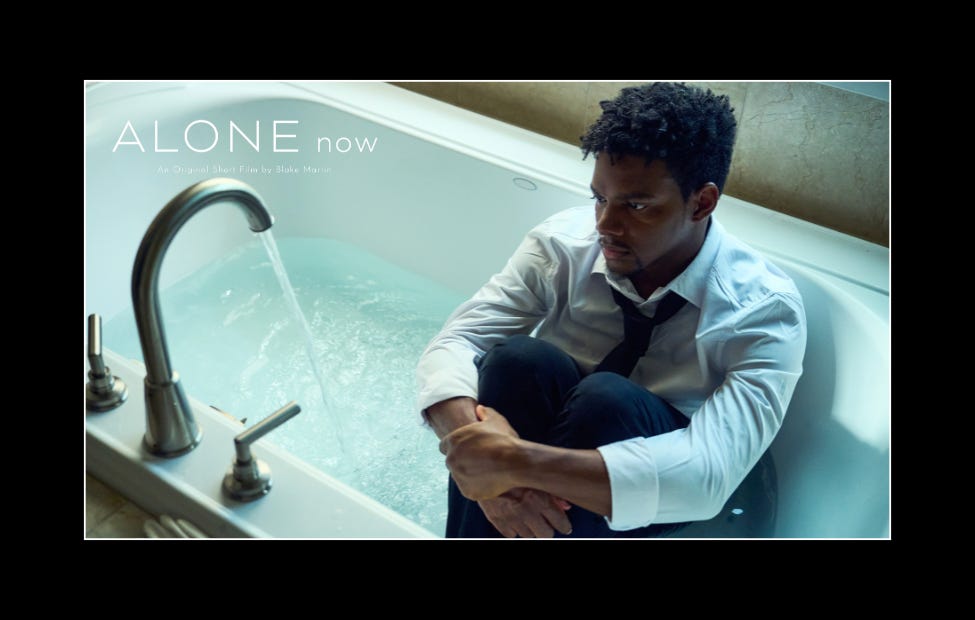
There’s a particular kind of ambition that only makes sense once you see the work. On paper, “six short films in six months” reads like a stunt — the kind of self-imposed deadline that sounds good in an artist statement and falls apart under the weight of casting, locations, and life. But one year into directing, with zero film school on his resume and a growing body of work that says otherwise, Chicago filmmaker Blake Martin has made that math look less like a gimmick and more like a philosophy.
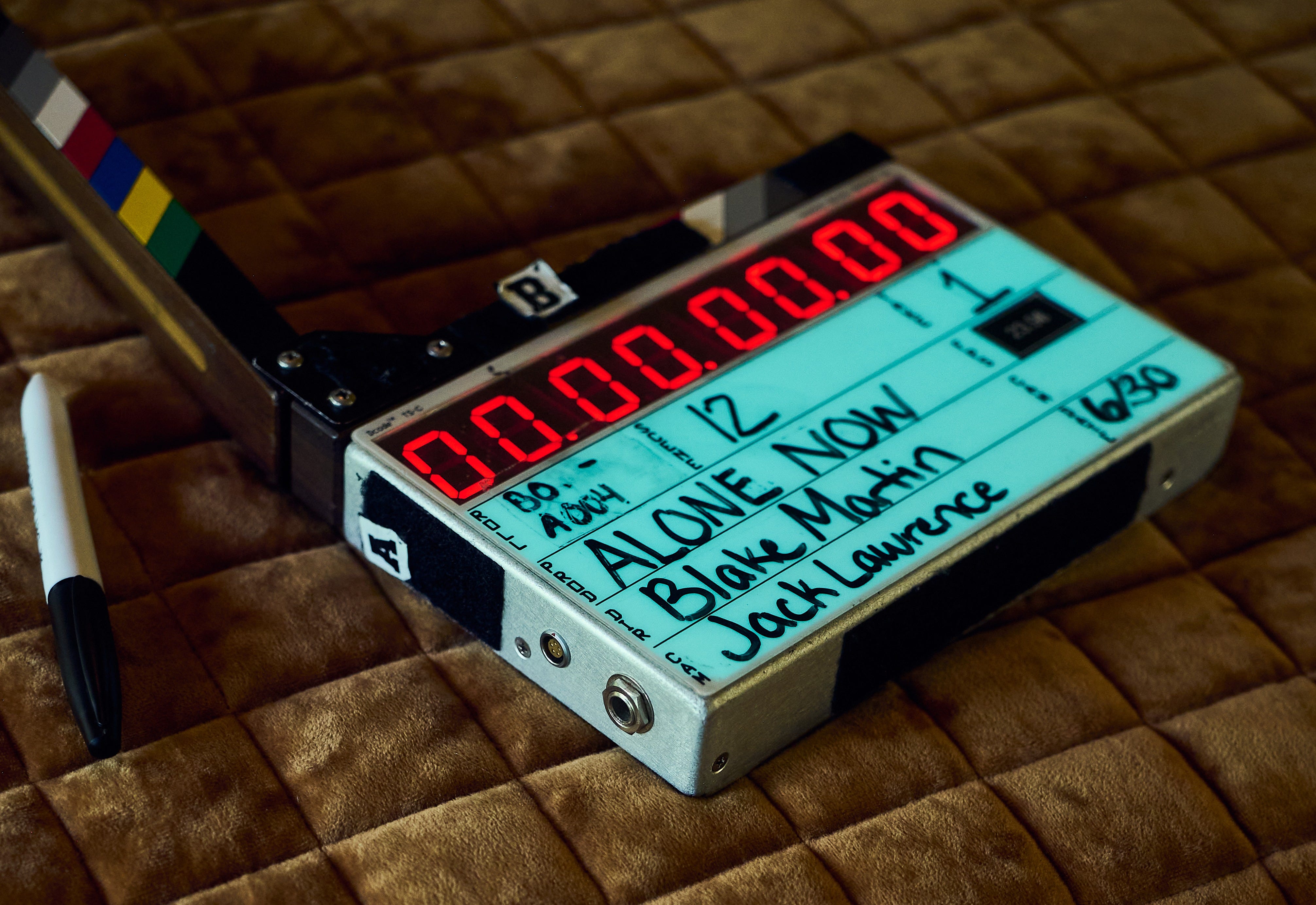
Martin just wrapped the third installment of that slate — Alone, Now — and the first-look photos, released here exclusively, offer a glimpse into what may be his most emotionally exposed work yet.
A Director Building a Name, One Short at a Time
Martin didn’t come up through a traditional pipeline. No thesis film, no mentor on faculty, no industry pedigree to lean on. What he has instead is a stretch of work — dramatic, surreal, comedic, and unflinchingly intimate — that’s started to earn him a reputation among festival programmers and fellow filmmakers as someone worth watching closely. In under a year behind the camera, he’s built a name for narratives that take risks most first-year directors wouldn’t touch, and for a directing style actors describe as collaborative rather than dictatorial — someone who arrives with a fully realized vision but still leaves room for the performer to find the truth of it themselves.
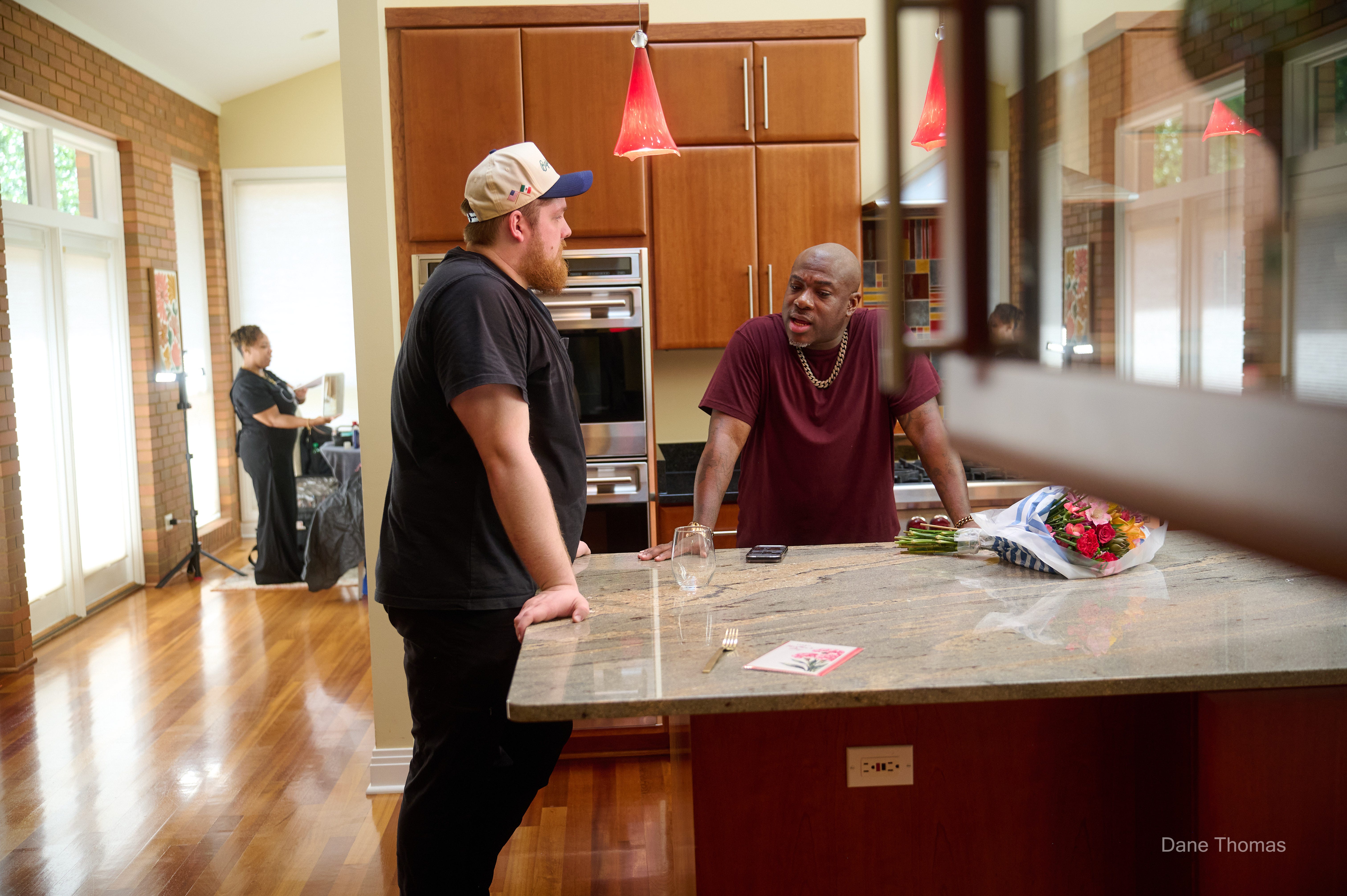
The six-films-in-six-months challenge isn’t really about output for its own sake. Ask Martin about it and he’s disarmingly candid.
“To do six films in six months is insane. I know. I agree,” Martin says. “But it’s been so rewarding. This isn’t about making an award-winning film this time, or trying to change the game, as people like to say. This is about the work of doing the work. It’s about growth — learning, failing, and getting better, film by film.”
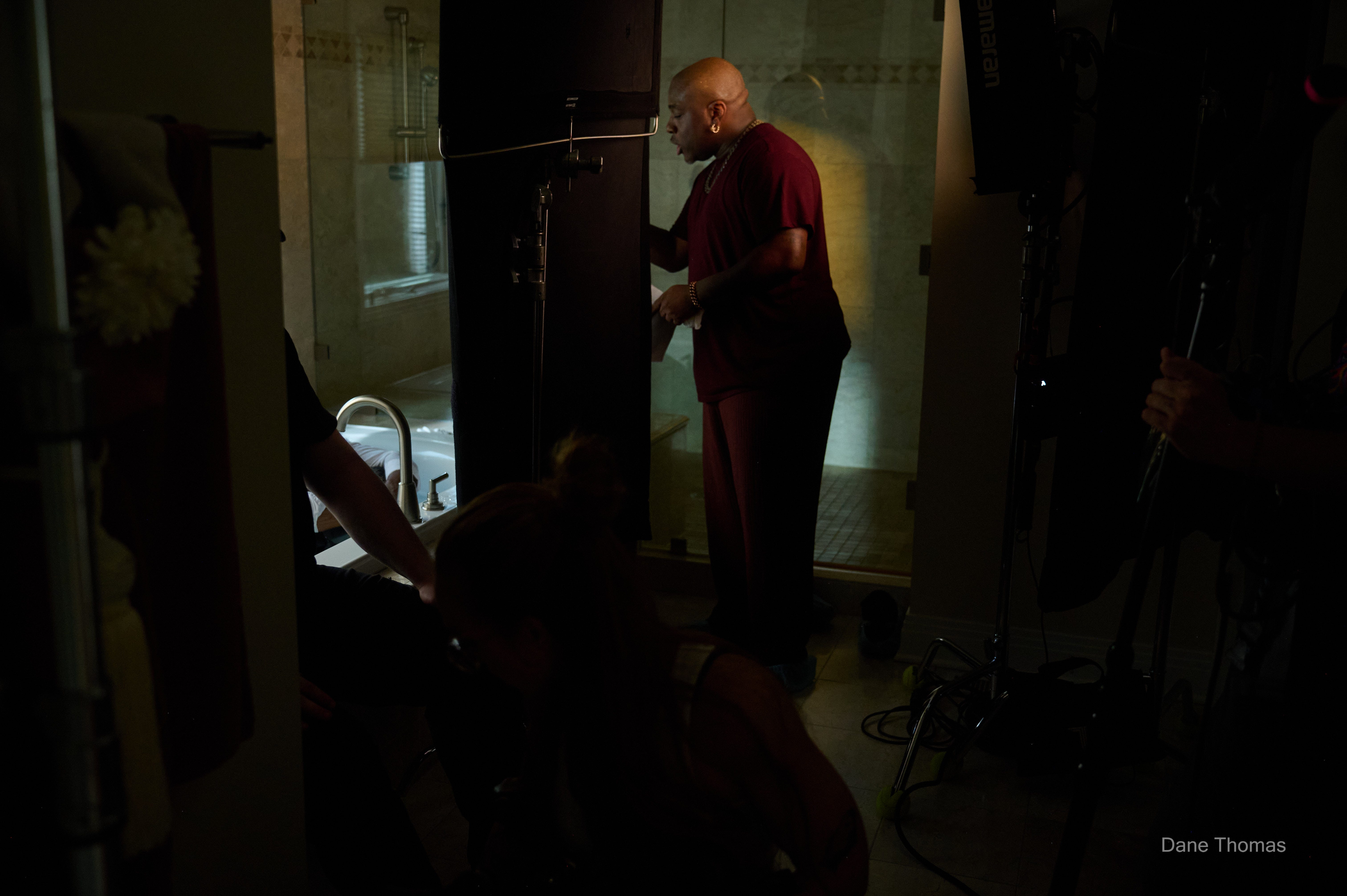
There’s also a bigger target underneath the personal one. Martin has been vocal about the fact that this slate isn’t just a career move for him individually — it’s an attempt to plant a flag for Chicago’s independent film scene, a community he believes is overdue for wider recognition on the festival circuit and beyond.
Inside Alone, Now
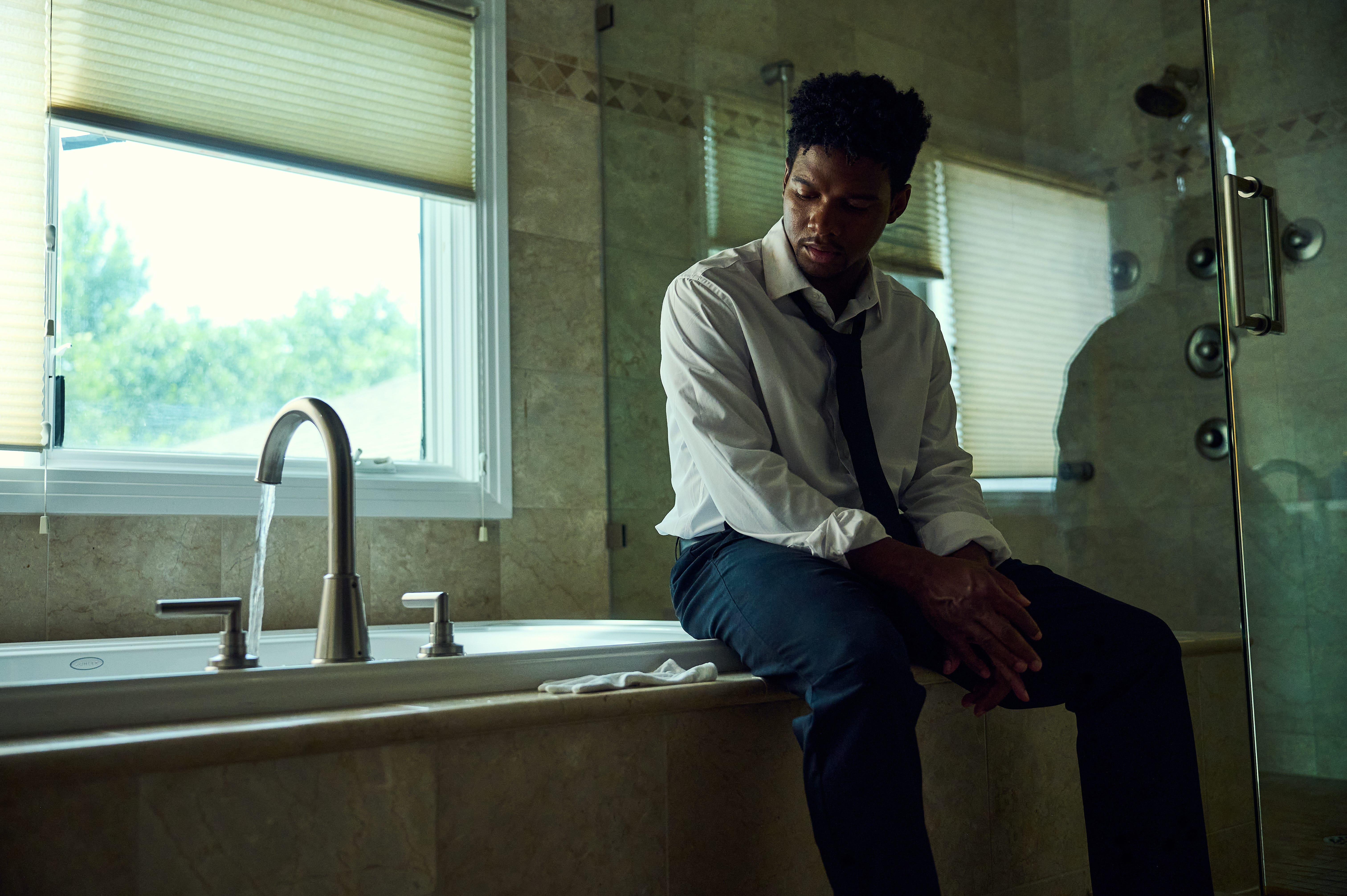
Alone, Now opens on a man named Charlie, wide awake and full of light on an ordinary Sunday morning — the kind of morning that feels like nothing could touch it. That feeling doesn’t last. Without giving too much away, the film pivots hard into loss, and spends its second half sitting with Charlie in the wreckage of it, largely without words, alongside his cousin Kiesha — the one person who shows up and simply stays.
It’s a short film built on restraint. Martin leans on texture, repetition, and small physical details to carry weight that dialogue never has to — trusting silence as much as, maybe more than, anything spoken aloud. It’s the kind of short that asks an audience to sit in discomfort rather than resolve it, and asks its lead actor to do the same.
And for Martin, that trust wasn’t theoretical. It was personal, in the most literal sense.
“This was my most personal story,” Martin shared. “It was filmed the week of my mother’s ten-year death anniversary. A lot of people thought it would break me. But filming it was actually the most healing thing I’ve done in the ten years since she’s been gone.”
Already Turning Heads
Even in these early stages — festival submissions still pending, the ink barely dry on the color grade — Alone, Now is generating buzz that outpaces its budget and its runtime. Industry conversations and early festival interest have started to circle the project, a sign that Martin’s instinct for emotional specificity is translating beyond Chicago’s borders.
Building Charlie and Kiesha
Casting on Alone, Now didn’t happen the way it usually does. Martin skipped auditions entirely for both leads, trusting instinct over process — a choice that speaks to how personal this film was for him from the very first draft.
For the role of Charlie, Martin wrote the script and picked up the phone, calling Taijun Waters directly. “I have something for you,” he told him. He knew immediately Taijun was the one. It was a demanding ask: Charlie is a deeply faith-driven man, and the script pushes him toward moments where grief curdles into something closer to rage at God — a near-denunciation of the very faith that defines him. Martin knew that would be a difficult needle for Waters, who shares that same faith in his own life, to thread. He didn’t flinch.
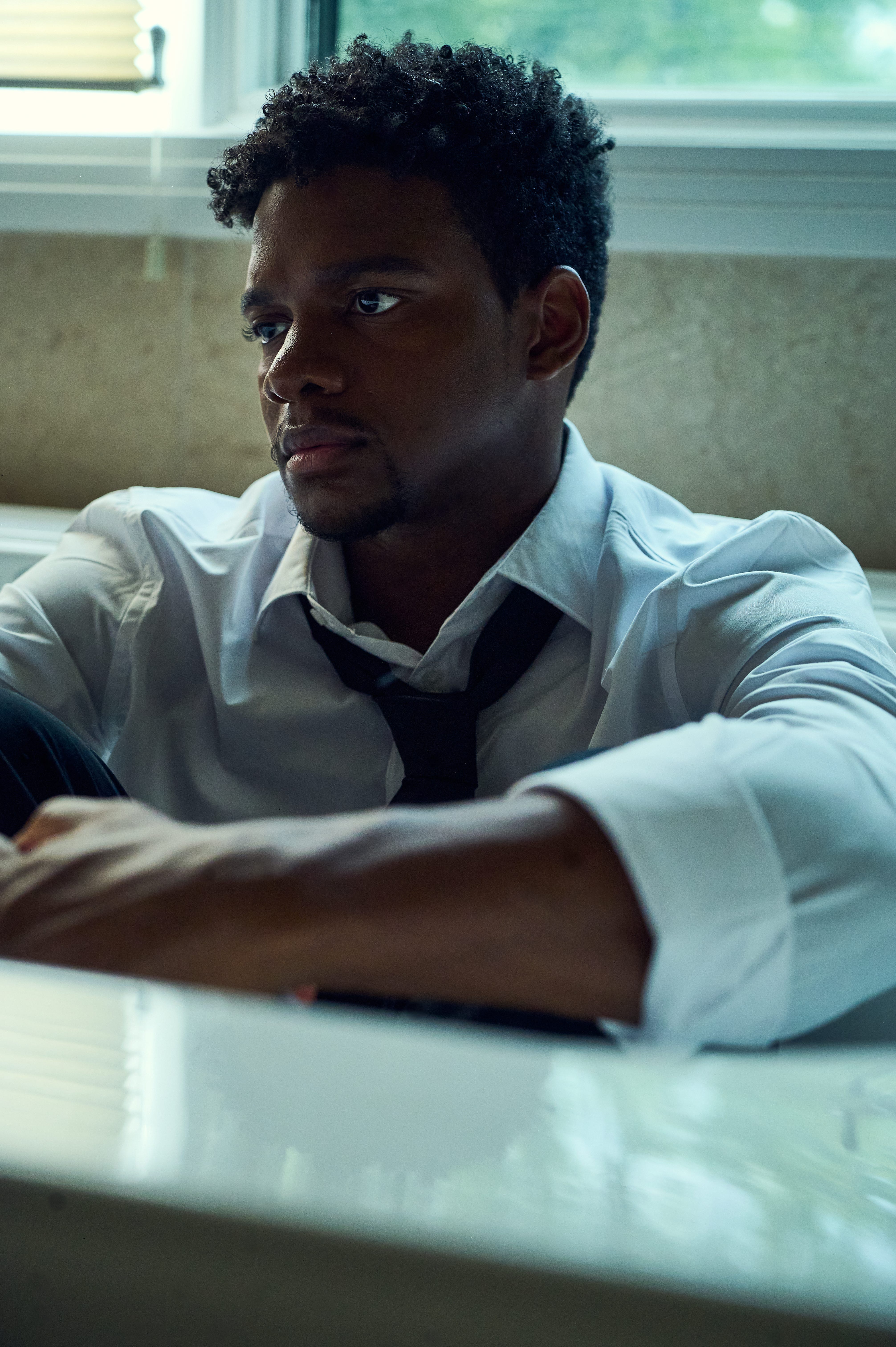
“There was so much vulnerability that this role required — mentally, spiritually, physically,” Martin says. “I was so moved by his performance.”
Waters describes building Charlie from the inside out, long before a camera ever rolled. “I aim to always live my characters from my inner thoughts and out,” he explains. “So creating a conducive thought life for Charlie, and thus his motivations, was my primary prep — so my body could serve it truthfully.”
Because the film was shot out of sequence, Waters also had to engineer Charlie’s emotional collapse in reverse — arriving at the character’s most devastated moments before filming his joy, and vice versa. “I just had to be intentional and remember the audience’s journey in every scene, to assure my body communicated a declining crescendo,” he says. The film’s most emotionally demanding sequence, shot continuously for roughly three hours, pushed that discipline to its edge. “By the end of it, I was definitely emotionally and physically drained,” he adds.


For Kiesha, Charlie’s cousin and the only person who witnesses his collapse up close, Martin turned to Shenice Danyel — a discovery made far from any traditional audition room. Martin caught her performance at a local Chicago theater production and knew on the spot. “The moment she stepped on stage, I just knew I wanted to work with her,” he says. Landing her for the role of Kiesha, he adds, was an honor.
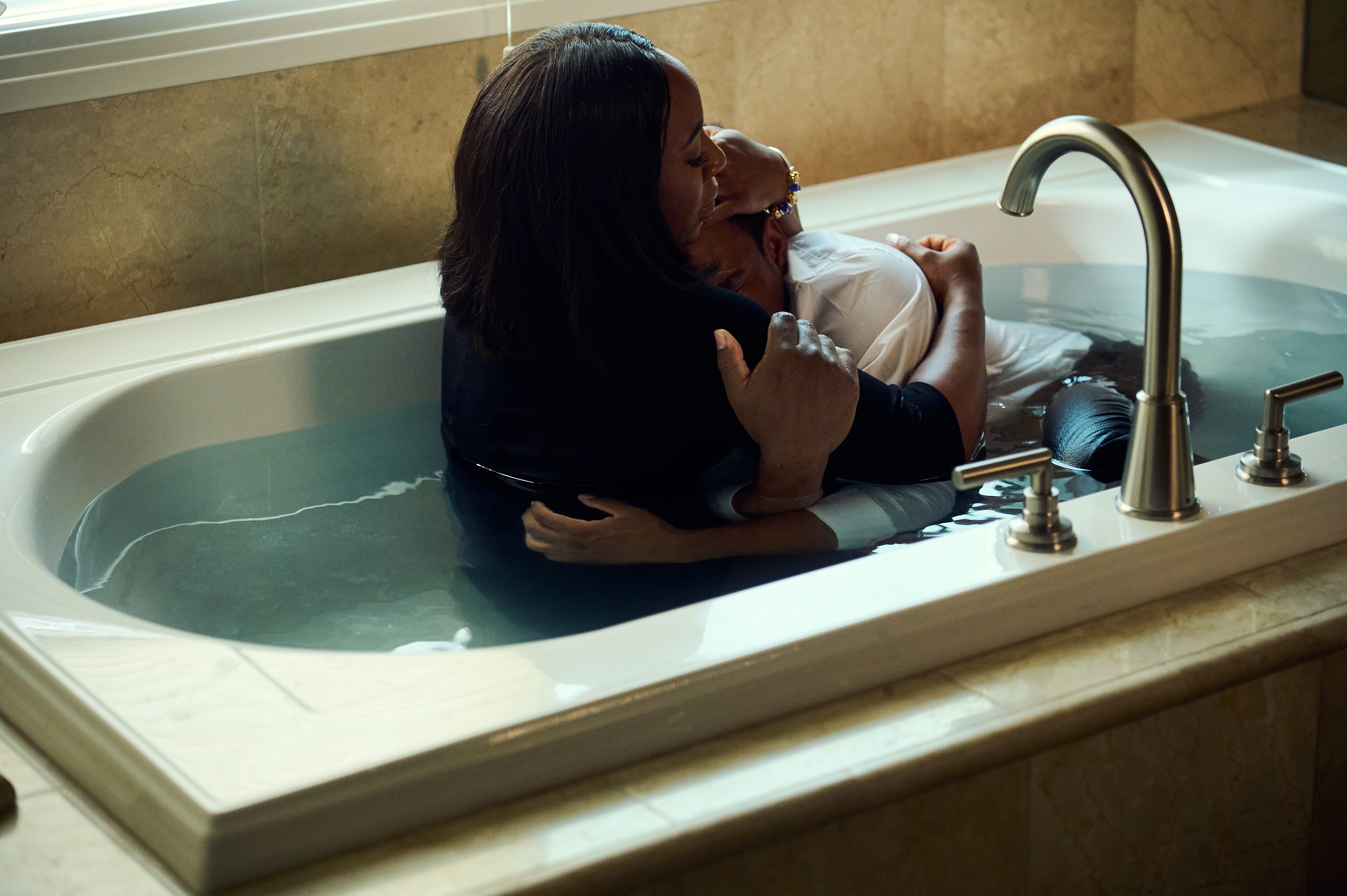
Danyel’s performance leans into restraint — a woman who wants desperately to fix something that can’t be fixed, and instead chooses to simply stay. It’s a quieter role than Charlie’s, but no less essential to the film’s emotional architecture; Kiesha is the audience’s tether into the film’s hardest scenes, the person who makes Charlie’s silence bearable to witness.
It was Waters’ first time working with Martin, and he came away struck by the density of intention behind every choice on set. “As a multidisciplinary artist, I appreciate when every detail of a garment or artwork builds toward the ultimate meaning,” Waters says. “The level of detail he put into every layer of the story, wardrobe, and script was impressive — exactly what I sign up for in the films that I love. All factors wove together symbolically.”
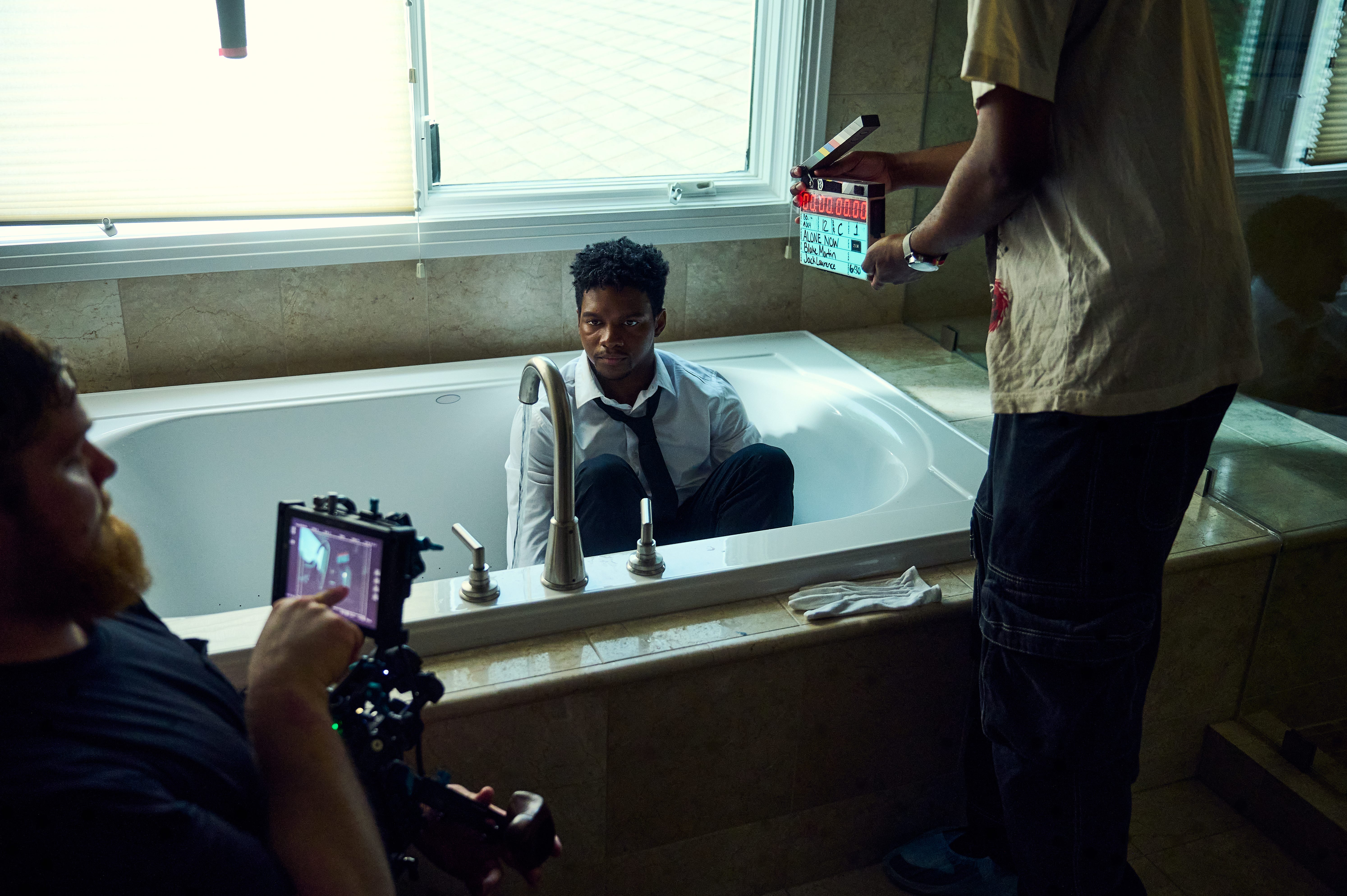
Asked what he hopes audiences take from Charlie’s journey, Waters doesn’t hesitate. “I hope they understand that they are not alone. Grief does not have an expiration — and that is real. But it does have a community. And loving another well, in community, is essential for the love we all will one day lose to time.”
What Comes Next
Alone, Now is the third film in a slate that still has three more chapters to go, and if the early response is any indication, Martin’s willingness to mine his own life for material — rather than reach for something safer or more distant — is exactly what’s setting this run of films apart. It’s a short film about losing the person who loved you first, made by a filmmaker who lost his own mother a decade ago and chose, deliberately, to walk back into that grief with a camera in hand.
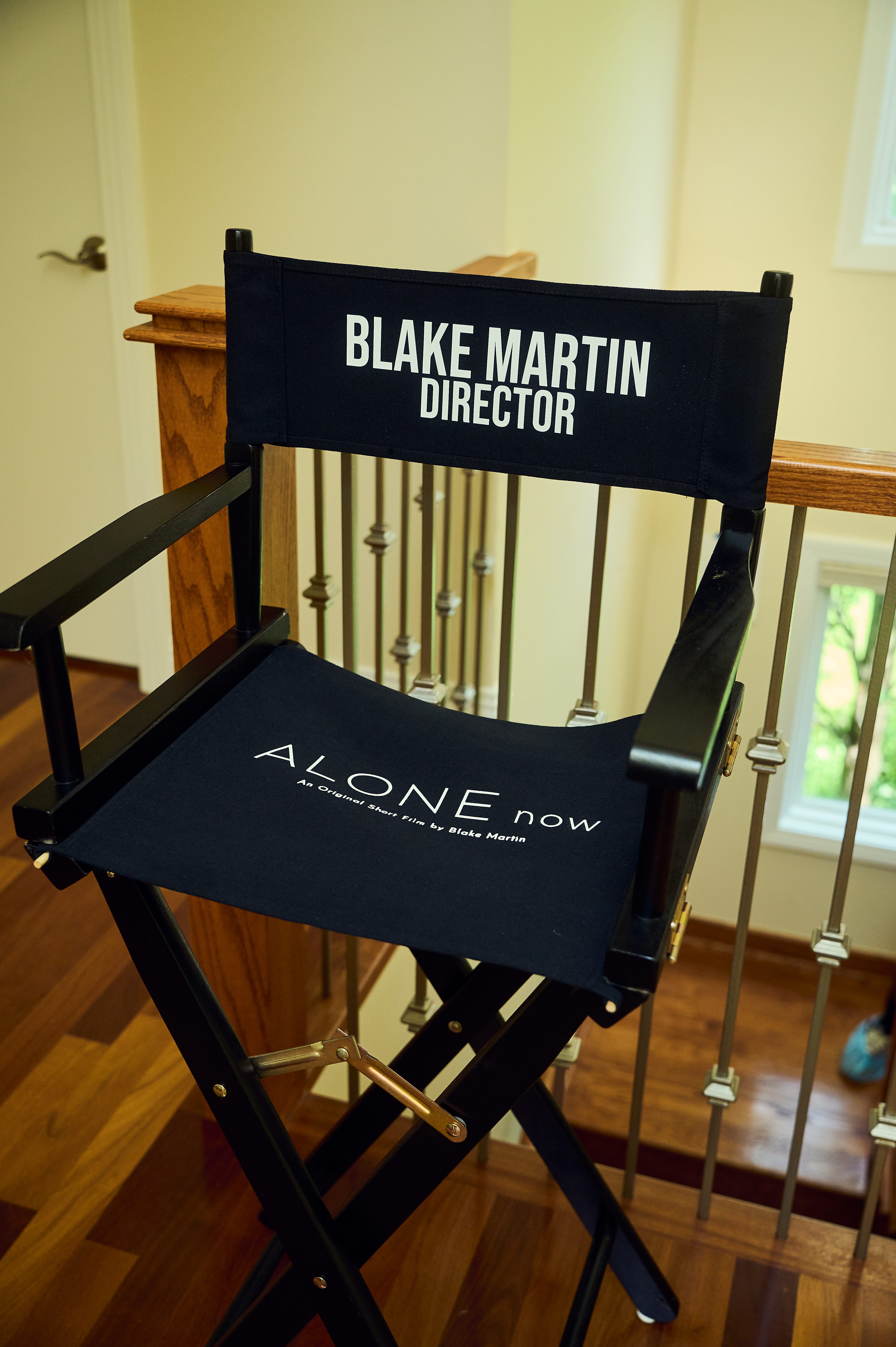
Six films in six months is, by Martin’s own admission, a little insane. But Alone, Now suggests the insanity is producing something real — and Chicago’s independent film scene may have a new name to watch.
Photo Credit: Dane Thomas
Alone, Now, written and directed by Blake Martin, stars Taijun Waters as Charlie and Shenice Danyel as Kiesha. The film is currently submitting to festivals, with a premiere planned for October 2026.