


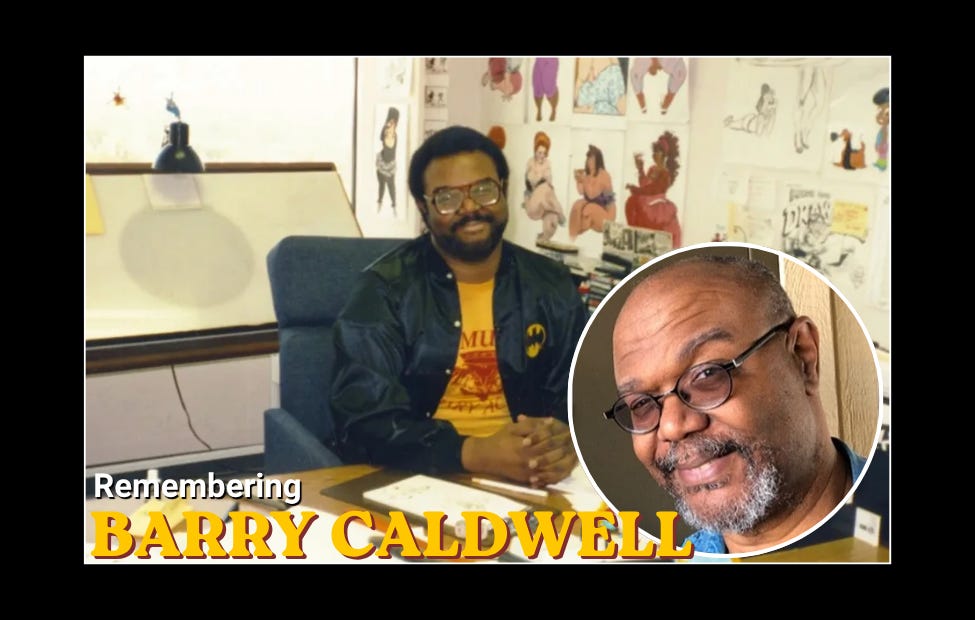
NEW YORK — If you grew up sprinting home from school to catch Animaniacs or spending Saturday mornings glued to Pinky and the Brain, there’s a very real chance Barry Caldwell had something to do with why you loved it so much. The veteran animator, storyboard artist and director passed away this week, and the tributes flooding in from across the industry paint the picture of someone who was, by every account, both an exceptional talent and an even better person. The kind of person the industry quietly runs on.
The news was first shared March 24 by writer and comic book artist Paul Dini, who announced Caldwell’s passing on Facebook after being informed by fellow animator Dan Haskett. Specific details surrounding the cause and circumstances of his death have not been publicly confirmed.
Caldwell’s career stretched across more than four decades, beginning around 1980 with Fat Albert and the Cosby Kids. From there, it reads like a greatest-hits list of animation history. Not the obscure stuff, either. We’re talking The Smurfs, Alvin and the Chipmunks, Tiny Toon Adventures, Animaniacs, Pinky and the Brain, Kim Possible, Clifford the Big Red Dog and Tom and Jerry. On the film side, his credits include Osmosis Jones, Curious George, Mulan II, Alvin and the Chipmunks: The Squeakquel and Hop. The man was everywhere. If you watched cartoons in the last 45 years, you watched Barry Caldwell’s work. Full stop.
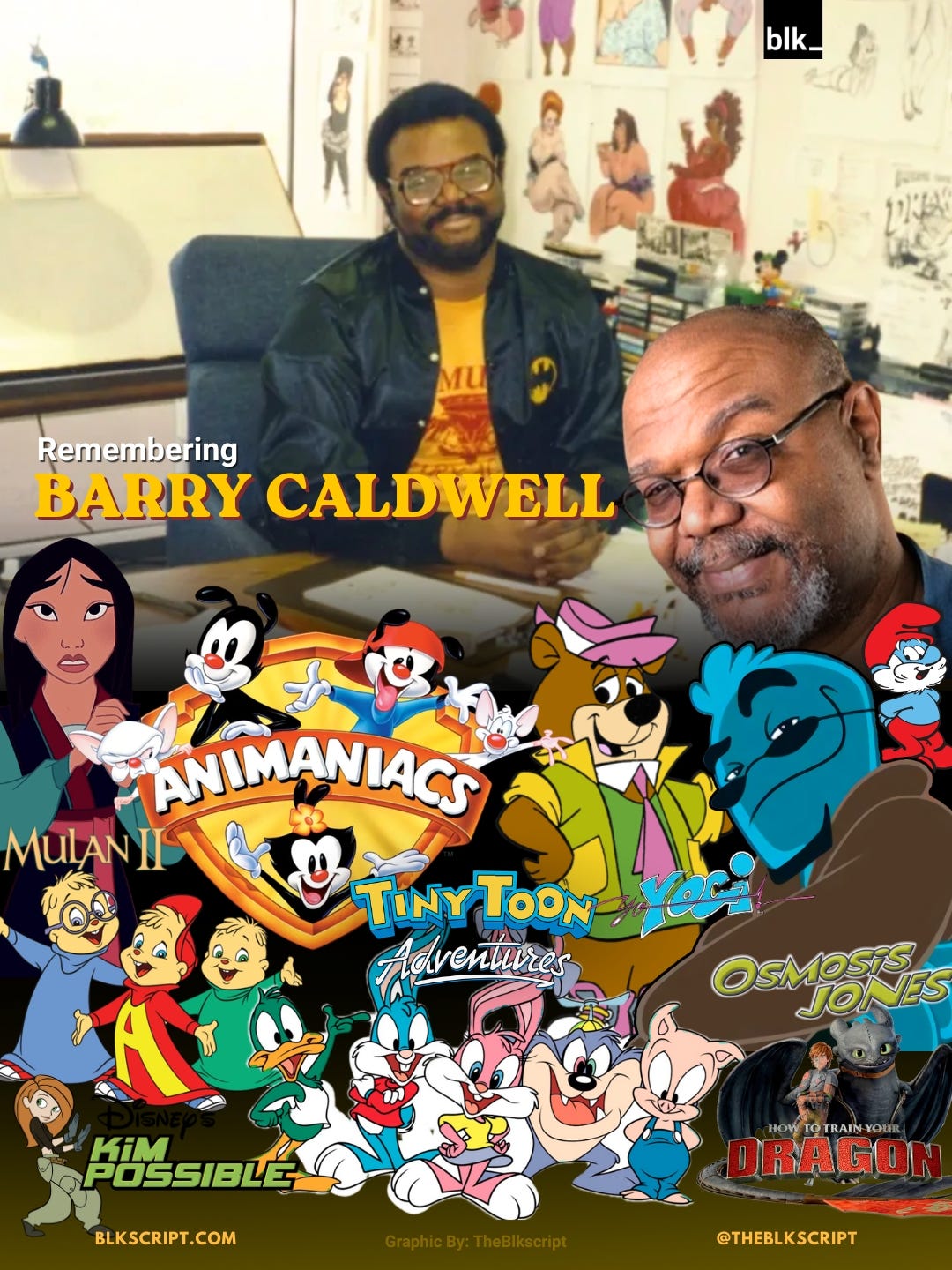
He trained at the School of Visual Arts in New York City before launching his professional career in the late 1970s at Filmation, the studio behind some of the era’s most iconic Saturday morning programming. Safe to say the foundation was solid from day one.
Caldwell worked primarily as a storyboard artist, a behind-the-scenes role that is, honestly, more important than most people realize. Storyboard artists are the ones translating scripts into actual visual storytelling. They determine how a scene moves, how a joke lands, how emotion reads on a character’s face before a single frame is animated. It is the kind of work that makes or breaks a show. No pressure. And Caldwell? He was exceptional at it.
At Warner Bros. Animation, where he spent a significant stretch of his career, he went well beyond storyboarding. He directed and wrote episodes of Animaniacs, a series that won eight Daytime Emmy Awards and a Peabody Award. His fingerprints are on some of the show’s most memorable segments, including “Bumbie’s Mom” and “Sir Yaksalot.” He also helped shape the personalities of characters like Babs Bunny and Fifi La Fume in Tiny Toon Adventures. That is not a footnote. That is a legacy.
Dini’s tribute said as much. A longtime friend and collaborator who first met Caldwell around 1980, Dini wrote that Caldwell was “one of the finest artists I ever met, and easily one of the best people.” He described him as “funny, kind, a genial giant of a guy that you liked from the moment you met him,” someone who knew more about cartoons than almost anyone in the room but was never precious about it. Generous with his time. Generous with his talent. The rare kind of person who is both incredibly good at what they do and genuinely easy to be around.
One line from Dini’s tribute really cuts to the heart of it: No artist, he wrote, ever mocked the absurdity of the Hollywood cartoon system with more devastating precision, yet still loved what it produced with everything he had. That balance is rare. Most people pick a lane. Caldwell somehow managed both, and the work was better for it.
The broader response from the animation community has been equally warm. Former colleagues have described him as kind, gracious, fun and impossibly talented. One animator who worked with him on Pinky and the Brain called him “so kind and gracious” and noted what a joy he was to be around on set. Another who first crossed paths with him at Filmation in 1979 remembered him as “one of the most talented young artists” they had ever encountered starting out. Forty-plus years later, the sentiment has not changed.
In a 2024 podcast interview with Cartoonerific, Caldwell spoke with host Brian Mitchell about his time at the School of Visual Arts and his path into the industry. In hindsight, it is a rare and valuable window into the mind of someone who spent his whole life in love with the craft of animation. Worth finding if you have not heard it yet.
The animation world has a long history of behind-the-scenes talent that never quite gets its flowers publicly. People whose names don’t appear on posters but whose creative decisions shaped what millions of kids watched, rewatched and quoted for years. Barry Caldwell was one of those people. The work speaks for itself. It always did.
Rest well.
— REAVES // @wildreaves
Thank you Barry for making my hell young childhood heaven while watching your cartoons!!